
Startup concept · India first, global next

cucumberStay fresh.

An affordable-premium smartphone company built for India and emerging global markets: honest pricing, long software life, repairable hardware, and on-device AI that respects your data.

7 years
OS + security updates
₹9,999+
Entry price point
Y3
Break-even target
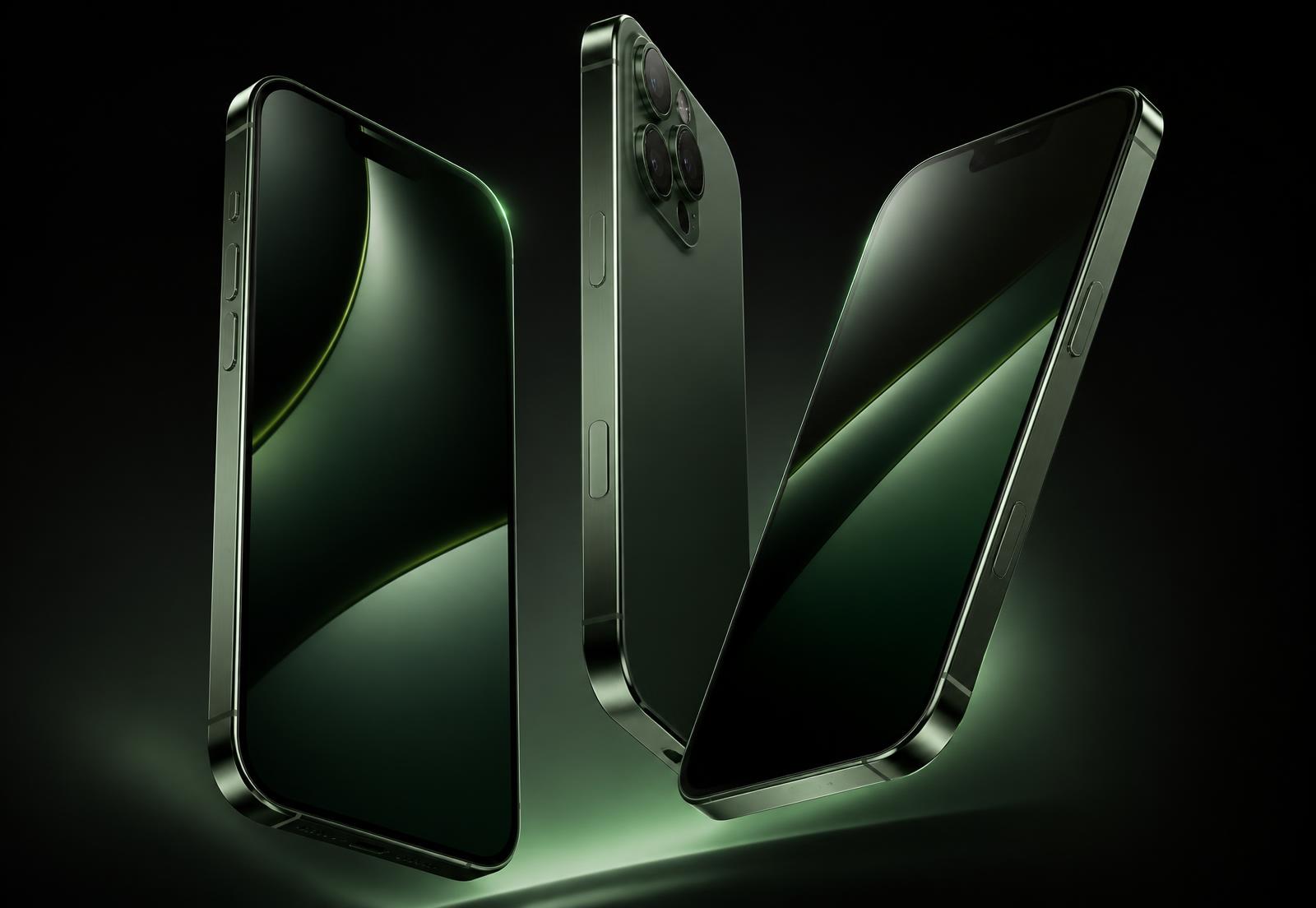
Three Cucumber smartphones in Vine Green with rim lighting

Brand identity

cucumber — Stay fresh.

A brand built on the one thing budget-premium buyers never get: a phone that stays good years after the launch hype. The name is deliberately non-technical, easy to say in every Indian language, and instantly memorable in a category of alphanumeric noise.

Why we exist

Mission

Put genuinely premium technology — flagship silicon, real cameras, long-life software — in the hands of the next billion users at prices they can justify, without hidden costs in ads, data, or planned obsolescence.

Where we're going

Vision

By 2031, be the default choice for first-time premium buyers across India, Southeast Asia, Africa and Latin America — the brand people upgrade to, not away from.

How we sound

Personality

Youthful but not childish. Confident but not arrogant. Plain-spoken, technical when it matters, funny in short bursts. Think a smart friend who actually reads spec sheets.

Brand values

  • Honest by default

    Published BOM-to-price logic, no ads or bloatware in the OS, ever.

  • Fresh for longer

    7 years of OS + security updates; battery and screen swaps under ₹3,000.

  • Built with, not at

    Public beta council of 10,000 users votes on roadmap features.

  • Quietly premium

    Restrained industrial design, no gimmick modes, no inflated spec sheets.

Logo concept & colours

A single-stroke rounded "squircle" — the silhouette of a phone and of a cucumber slice at once — with seven seed marks arranged in a ring, one per year of guaranteed updates. Monoline, works at 16px, embosses cleanly on metal, and animates by rotating the seed ring during boot and charging.

Vine Green #4CC13A

Primary — energy, freshness, growth

Deep Rind #0E1A14

Base — premium dark canvas

Seed Ivory #F4F6EF

Light surfaces and print

Zest #D8E84A

Accent — highlights and CTAs

Type: Space Grotesk for headlines, DM Sans for UI and body. Always lowercase wordmark.

Assumptions: Trademark availability for "cucumber" in class 9 varies by jurisdiction; the plan assumes a cleared word + device mark in India, EU and UAE first, with a fallback stylised lockup ("cucumber·mobile") if a pure word mark is refused.

Product line

Three series. One promise.

Seed for first-time and second-phone buyers, Crisp for the ₹20–30k volume heart of the Indian market, Prime as the halo that proves the brand can build a real flagship.

Entry

cucumber Seed 1

₹9,999 (4/64) · ₹11,999 (6/128)

≈ $119 – $145

Display
6.56" HD+ LCD, 90Hz, 600 nits, Panda Glass
Processor
MediaTek Dimensity 6300 (6nm, 5G)
RAM / Storage
4/64GB, 6/128GB · microSD to 1TB
Camera
50MP main (f/1.8) + 2MP depth · 8MP front · 1080p30
Battery
5,500mAh · 33W wired · 2-day typical
OS
FreshOS 1 on Android 16 · 3 OS + 5 security years
AI
On-device call transcription, scam-call warning, photo cleanup, offline Hindi↔English translate
Connectivity
Dual 5G SA/NSA, Wi-Fi 6, BT 5.3, NavIC, 3.5mm, IR blaster, IP54
Colours
Vine Green · Midnight Rind · Seed Ivory

USP: The cheapest phone in India with a guaranteed 5 years of security updates and a ₹1,499 user-replaceable battery.

Mid-range

cucumber Crisp 1

₹22,999 (8/128) · ₹25,999 (12/256)

≈ $279 – $315

Display
6.7" 1.5K AMOLED, 120Hz LTPS, 2,500 nits peak, 2,160Hz PWM dimming
Processor
Snapdragon 7+ Gen 4 (4nm)
RAM / Storage
8/128GB, 12/256GB LPDDR5X + UFS 3.1
Camera
50MP 1/1.56" OIS main + 50MP 3x periscope-lite tele + 8MP ultrawide · 32MP front · 4K60
Battery
6,500mAh Si/C · 80W wired · 0–60% in 22 min
OS
FreshOS 1 · 5 OS + 7 security years
AI
FreshCore NPU suite: live call translate, AI eraser, night video denoise, meeting summaries, offline assistant
Connectivity
Dual 5G, Wi-Fi 7, BT 5.4, NFC, UWB-lite, NavIC, IP68
Colours
Vine Green · Glacier Silver · Deep Rind

USP: Flagship-grade main camera sensor and a 6,500mAh silicon-carbon battery in a 7.9mm body — endurance without the brick.

Flagship

cucumber Prime 1

₹54,999 (12/256) · ₹62,999 (16/512)

≈ $649 – $759

Display
6.82" 2K LTPO AMOLED, 1–120Hz, 4,500 nits peak, Gorilla Armor 2
Processor
Snapdragon 8 Elite Gen 3 (3nm) + FreshCore co-processor
RAM / Storage
12/256GB, 16/512GB LPDDR5X + UFS 4.1
Camera
50MP 1-inch OIS main + 50MP 5x periscope + 50MP ultrawide/macro · 32MP AF front · 8K30 / 4K120, 10-bit LOG
Battery
5,800mAh Si/C · 100W wired · 50W wireless · 0–100% in 28 min
OS
FreshOS 1 Pro · 7 OS + 7 security years
AI
Full on-device 3B model: agentic assistant, generative photo expand, real-time 12-language interpreter, AI RAW pipeline, private cloud burst only with explicit consent
Connectivity
Dual 5G mmWave-ready, Wi-Fi 7, BT 6.0, UWB, satellite SOS (partner), NavIC, IP69
Colours
Titanium Vine · Obsidian Rind · Frost Seed

USP: A true flagship at upper-mid pricing: titanium build, 1-inch sensor, and every AI feature running on-device with a visible privacy ledger.

Assumptions: Chipsets, sensor sizes and prices reflect 2026 component availability and Indian GST at 18%. Actual silicon allocation for a first-year brand is limited — Qualcomm/MediaTek typically require volume commitments, so flagship SoC supply is modelled at 150k units max in year 1.

Unique technology

Six things the incumbents structurally won't copy

Each of these is either cheap for a startup and expensive for an incumbent (repairability, ad-free OS) or a focused bet where scale players are distracted (on-device AI, Indian network tuning).

FreshCore

A small dedicated NPU co-processor (licensed RISC-V NPU IP) paired with the main SoC, so a 3B-parameter assistant runs locally at ~1W. Competitors offload most generative work to the cloud; Cucumber's default is on-device, cloud only on explicit consent.

CellGuard adaptive battery

Silicon-carbon cells plus a charge policy that learns your routine, holding at 80% overnight and topping up before you wake. Target: 90% health at 1,000 cycles vs the ~80% industry norm — printed on the box as a warranty-backed number.

OpenSwap repairability

Screws not glue, a modular battery/screen/port sled, and public parts pricing. Battery ₹1,499, screen from ₹2,999, USB-C port ₹499, self-repair kits shipped nationwide with iFixit-style guides.

PrivacyLedger

An OS-level ledger showing every app's data egress in plain language, plus a one-tap 'seal' mode that feeds apps synthetic location/contacts instead of denying them (which usually breaks the app).

BharatSignal

Antenna tuning plus a modem policy stack trained on Indian tower density: aggressive band switching, 5G-to-4G fallback without stalls, and a low-signal call mode that cuts drop rate. Also powers offline-first behaviour for Tier-2/3 users.

SliceLink

Cross-device fabric: phone screen streams to any Chromecast/Miracast display or a Cucumber-certified laptop app, clipboard and files sync over local Wi-Fi Direct with no account required, and the phone becomes a webcam or a Linux-capable desktop in dock mode.

Assumptions: FreshCore assumes licensed NPU IP integrated on the board rather than a custom SoC — a custom flagship SoC costs $300M+ and 3–4 years, out of reach for a startup. CellGuard cycle life assumes qualified Si/C cells from an established cell maker (e.g. an ATL/BYD-class supplier) and is warranty-backed only after 12 months of field data.

Software

FreshOS — Android, minus the noise

An AOSP-based skin with Google Mobile Services, built by a ~90-person software team. The product is restraint: fewer features, better maintained, for longer.

Clean design

Zero pre-installed third-party apps, zero ads in system apps, zero notification spam — contractually guaranteed and audited annually by a third party.

Sprout assistant

On-device agent: summarises calls and notifications, drafts replies in Hinglish and 11 Indian languages, controls settings by voice, works fully offline for core tasks.

Privacy controls

PrivacyLedger dashboard, per-app network kill switch, permission auto-revoke, encrypted second space, and a monthly plain-English privacy report.

Battery optimisation

Per-app power budget with a visible 'who drained me' timeline, adaptive charging, and a 3-day Endurance mode that keeps calls, UPI and maps alive at 5%.

Customisation

Themable icon packs, always-on display editor, custom animation curves, alternative launchers supported without penalty, unlockable bootloader that keeps warranty on hardware.

Cross-device

SliceLink desktop app for Windows/macOS/Linux, watch and buds pairing in one tap, call handoff, and shared clipboard.

Updates

Monthly security patches for 5 (Seed) to 7 years (Crisp/Prime), OS betas open to the Beta Council, and a published update calendar with penalties: miss a promised patch month and every affected owner gets ₹200 of store credit.

Assumptions: GMS certification requires a Google MADA and per-device CTS passes; the 7-year commitment depends on chipset vendor BSP support, which is contracted upfront (Qualcomm and MediaTek both now offer extended-support programmes). Ad-free means no revenue from the ~₹150–300 per device that rivals earn from preloads — priced into hardware margin instead.

Business strategy

Asset-light, margin-honest, service-heavy

The strategy accepts thin hardware margins in exchange for trust, then earns durable revenue from services, accessories and repeat upgrades — the opposite of buying share with ads inside the OS.

Target customers

Primary: 18–32 urban and Tier-2 Indians upgrading from a ₹12–20k phone, spec-literate, YouTube-review driven. Secondary: value-seeking professionals wanting flagship cameras under ₹60k. Third: families buying a durable, repairable first phone. Global: Indonesia, Philippines, Nigeria, Egypt, Brazil, then EU value segment.

Pricing strategy

Cost-plus with published logic. Entry sold at ~8% gross margin (traffic driver), mid-range at ~18%, flagship at ~26%. No launch-price inflation, no ₹X,999 'effective price after bank offer' theatre — one price, all channels, all quarter.

Manufacturing

Asset-light EMS: contract with an Indian partner (Dixon, Bhagwati/Micromax or Padget) under PLI-eligible terms. Cucumber owns ID, PCB design, thermals, firmware and QC; EMS owns lines. Year 1: 1 line, ~40k units/month. Year 2: add SMT + local battery pack assembly.

Supply chain

Dual-source everything above 3% of BOM. Displays: BOE + Tianma. Cells: one Chinese tier-1 + one Indian pack assembler. Camera modules: Sunny/Truly. 12-week rolling forecast with EMS, 6 weeks of safety stock on long-lead parts, and 20% of components localised by year 3 for PLI credit and duty savings.

Online sales

70% of year-1 volume: own D2C store (best margin, ~15% of sales), Flipkart and Amazon (~55%). Weekly restocks, no artificial flash-sale scarcity.

Offline sales

30% and rising: 250 multi-brand outlets in 12 cities at launch via one national distributor, plus 15 experience corners inside partner stores. Retailer margin 6–9% — thin, offset by guaranteed sell-in buyback on slow SKUs.

Marketing

Credibility-first: teardown and durability content, tech YouTubers, no celebrity endorsement in year 1. ~9% of revenue in year 1, tapering to 6% by year 3.

After-sales

Hybrid: 120 authorised service centres via a national partner (e.g. an existing multi-brand ASP network) + doorstep pickup in 30 cities + walk-in same-day screen/battery swap in 20 cities. Target: 90% of repairs closed in 48 hours, parts SLA 7 days.

Warranty

24 months standard (vs the industry's 12), 12 months on accessories, and a free one-time screen replacement in the first 6 months on Crisp and Prime. Battery warranted to 85% health at 2 years.

International expansion

Year 2: UAE + Nepal + Bangladesh (low certification cost, Indian diaspora pull). Year 2 H2: Indonesia and Philippines via local distributors. Year 3: Nigeria, Egypt, Brazil, and an EU pilot in Poland/Spain where 7-year updates and repairability align with the EU Ecodesign and repair-score rules.

Marketing & launch campaign

Proof, not promises

A challenger brand cannot outspend Samsung. It can out-prove them — and every campaign asset below is designed to be verifiable by a stranger with a screwdriver.

Slogan

"Stay fresh." — supported by the proof line "7 years of updates. 2 years of warranty. One honest price."

Launch event

"The Cold Open": a 40-minute livestream from a working repair bench, not a stage. The founder disassembles the Prime 1 on camera in 4 minutes, shows the BOM sheet, prices every spare part live, then hands three units to independent reviewers in the room for an unscripted 10-minute first impression. Cost target: ₹1.2 crore vs ₹8–10 crore for a stadium launch.

Social media

YouTube = long-form proof (teardowns, 30-day battery logs, camera vs iPhone blind tests). Instagram/Reels = design and colours. X = engineering transparency and roadmap. WhatsApp Channel = update changelogs to owners. A public monthly 'Fresh Report' on bugs fixed and bugs still open.

Influencers

Three tiers: 6 flagship tech reviewers (paid for time, never for opinion, contracts published), 60 mid-tier regional-language creators across Hindi, Tamil, Telugu, Bengali and Marathi, and 1,000 Beta Council members with early units and referral codes. No scripted talking points — a published policy.

Advertising

Hero film: a phone bought in 2026 still getting an update in 2033, shown as one unbroken shot of a life changing around it. Performance: search + Meta retargeting on 'best phone under 25000'. Outdoor: 15 metro stations with a live counter of days of updates remaining. Print: one full-page BOM breakdown in a national daily on launch day.

Website

cucumber.com — configurator-first, price transparent, with a 'Total Cost of Ownership over 7 years' calculator comparing Cucumber against three rivals, plus a public spare-parts price list and an update-history page for every model.

Pre-order

₹999 refundable token opens 14 days before sale. Token holders get the 6-month free screen replacement, a colour exclusive (Zest Yellow), priority 48-hour delivery, and Beta Council entry. Target: 75,000 tokens, ~55% conversion.

Financial plan

₹560 crore to get to the shelf

Figures are modelled in Indian rupees at 2026 costs, ex-GST unless stated. Hardware is a cash-hungry business: the plan raises in three tranches rather than one, and treats year 1 as paid market research.

₹560 cr

Startup budget (≈ $67M)

620k

Year-1 unit target (India)

₹1,180 cr

Year-1 revenue target

Q2 Y3

Projected break-even

Startup budget breakdown

  • Product engineering (3 models, ID, PCB, thermals, tooling)₹62 cr
  • Injection moulds & test jigs (EMS-shared)₹18 cr
  • Software team (90 people, 18 months) + GMS certification₹41 cr
  • Certifications (BIS, WPC, TEC, CE, FCC) & IP/patent licences₹14 cr
  • First inventory build (250k units, mixed)₹210 cr
  • Marketing & launch (year 1)₹95 cr
  • Service network setup + spare parts pool₹34 cr
  • Working capital & contingency (18%)₹86 cr
  • Total₹560 cr

Unit economics

ModelLanded costMRPGross marginProfit/unit
Seed 1₹8,300₹9,999~8%₹680
Crisp 1₹17,900₹22,999~18%₹3,500
Prime 1₹38,500₹54,999~26%₹12,100

Blended year-1 gross margin ≈ 15%. Channel margin (6–9% offline, 4–6% marketplace fees), logistics and 2-year warranty provision (₹450–900/unit) are included in landed cost.

Growth plan

Year 1

India only. 3 models, 620k units, ₹1,180 cr revenue, EBITDA −₹165 cr. Goal: 4.6★ average rating and <2.5% return rate, not profit.

Growth plan

Year 2

Add Seed 2 / Crisp 2 + buds and watch. 1.9M units, ₹3,400 cr revenue, EBITDA −₹40 cr. Enter UAE, Nepal, Bangladesh, Indonesia, Philippines. Local SMT line for PLI credits.

Growth plan

Year 3

4.2M units, ₹7,900 cr revenue, EBITDA +₹310 cr (~4%). Break-even crossed in Q2. Enter Nigeria, Egypt, Brazil, EU pilot. Services (extended care, cloud, accessories) reach 7% of revenue at 45% margin.

Assumptions: Assumes ₹1 = $0.012, 18% GST charged to consumers, PLI incentive of 4–6% on incremental local production from year 2, no currency shock on imported components, and no flagship SoC price increase beyond 8% YoY. Year-1 losses are deliberate; the model does not reach positive EBITDA without either 4M+ annual units or a services attach rate above 6%. If year-1 sell- through misses by more than 30%, the plan is to cut the flagship line and concentrate on Seed/Crisp rather than discount the brand.

Competitive strategy

Where Cucumber actually wins

A new brand cannot beat incumbents on scale, silicon access or retail reach. It can beat them on the promises that cost incumbents real revenue to match: no ads, long updates, cheap parts, fast service.

Their strength

Apple

Ecosystem lock-in, resale value, 6–7 year updates, unmatched brand premium.

Our play: Don't fight it. Match the update promise at one-third the price, and win the buyer who wants longevity but can't spend ₹80k. Make SliceLink work with iPhones so switching costs nothing.

Their strength

Samsung

Retail reach, display supply, enterprise trust, huge marketing budget.

Our play: Beat them on offline service speed (same-day swaps) and on clean software — One UI is heavy and mid-range Samsungs are historically overpriced for the spec. Undercut the A-series by 15% with better silicon.

Their strength

Xiaomi

Scale, cost leadership, dense offline network, aggressive specs-per-rupee.

Our play: Attack the one thing users complain about: ads and bloatware in MIUI/HyperOS. 'Zero ads, contractually' is a direct, provable contrast that Xiaomi cannot match without losing real revenue.

Their strength

OnePlus

Community heritage, premium feel, strong online brand.

Our play: Take the community position OnePlus vacated: a real Beta Council, published roadmaps, unlockable bootloaders, and pricing that doesn't drift upward each generation.

Their strength

Realme

Fastest youth-segment growth, huge SKU count, loud marketing.

Our play: Counter SKU confusion with three clear models a year and no rebadging. Realme's weakness is update longevity and service quality — both are Cucumber's headline promises.

Their strength

Google Pixel

Best-in-class computational photography and AI, clean Android.

Our play: Match AI usefulness on-device rather than in the cloud, and beat Pixel where it is weakest in India: price, thermals, battery life, and service coverage outside metros.

Assumptions: Assumes rivals do not simultaneously match a 7-year update promise below ₹30k and remove preload revenue — historically they match one, not both. If they do match both, Cucumber's remaining moat is repairability and service speed, which is why parts pricing and the 48-hour repair SLA are contractual, not marketing.

India launch plan

19 months from incorporation to first sale

The first phone to market is the Crisp 1 — the mid-range. Launching the flagship first is a common startup mistake: it burns capital, invites unfair comparison, and sells in low volume before a service network exists.

  1. Month 0–3

    Foundation

    Incorporate, raise seed tranche (₹120 cr), lock EMS LOI, hire core ID/hardware/software leads, freeze Crisp 1 spec, sign chipset NDA and volume commitment.

  2. Month 4–9

    Design & EVT

    Industrial design freeze, PCB rev A, EVT-1 and EVT-2 builds (200 units), FreshOS alpha, begin BIS/WPC/TEC paperwork, sign display and cell suppliers.

  3. Month 10–14

    DVT & software beta

    DVT builds (2,000 units), drop/thermal/RF validation, GMS CTS pass, closed beta with 500 Beta Council members, service partner contracted, spare-parts pricing published.

  4. Month 15–17

    PVT & ramp-up

    PVT (10,000 units), line qualification at EMS, yield target >96%, first 120k units built to stock, distributor sell-in agreements signed, 120 service centres live.

  5. Month 18

    Teaser phase

    Reviewer seeding under embargo, teardown film shot, 'Stay fresh.' teaser across YouTube and metros, WhatsApp Channel opens, TCO calculator goes live on cucumber.com.

  6. Month 19

    Pre-order & launch

    ₹999 token pre-orders open (target 75k). 'The Cold Open' livestream. Embargo lifts 48h later. First sale on Flipkart, Amazon and D2C; offline in 250 outlets from day 5.

  7. Month 20–24

    Sustain

    Weekly restocks, first OTA within 14 days addressing launch feedback, monthly Fresh Report, NPS tracked weekly, Seed 1 launched at month 22 to widen the funnel.

Non-negotiable

Customer support from day one

24×7 in-app chat in 8 languages, callback within 15 minutes, doorstep pickup in 30 cities, and a published weekly repair-turnaround dashboard.

Month 19–24

Launch success metrics

75k pre-order tokens · 120k units sold in 60 days · <2.5% return rate · 4.5★ average marketplace rating · first OTA shipped within 14 days.

Be honest

Biggest risks

Component allocation for a low-volume brand, EMS yield in the first 3 months, service network quality outside metros, and cash burn if sell-through lags. Each has a named owner and a pre-agreed trigger to slow the ramp.